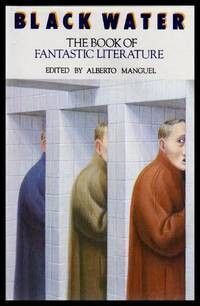
Twelfth book of '23 for me, "Black Water: The Book of Fantastic Literature” ( https://www.goodreads.com/book/show/53080.Black_Water I started a Bookwyrm and posted there too but, alas no one there has reviewed it yet), edited by Alberto Manguel. 72 fantastic stories in a door stop of a paper back (at least that’s how I read it), each one with a contextual introduction, and organized into themes.
gravely (@gravely@mastodon.social)Attached: 2 images
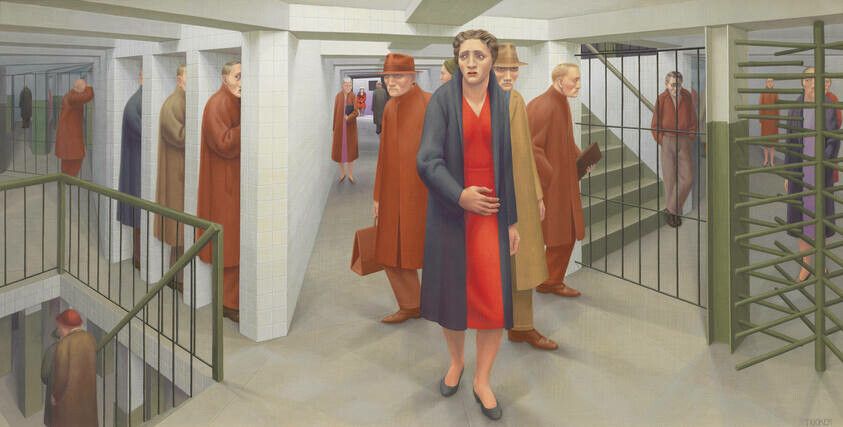
new to me used book, lovely inscriptionMastodon (opens in a new tab)Figure 2. Link preview of https://mastodon.social/@gravely/109372394967950916, "gravely (@gravely@mastodon.social)".Figure 3. paperback cover of Black Water, the title in black over an illustration of three people in blue, green, and red tunics decreasingly obscured in waht look like doorways in a subway, part of a larger painting https://whitney.org/collection/works/3052.Figure 4. The Subway is the best known of the figurative paintings George Tooker made in response to the social injustices and isolation of postwar urban society—paintings that find an analogue in the period’s existentialist philosophy. In The Subway, Tooker employed multiple vanishing points and sophisticated modeling to create an imagined world that is presented in a familiar urban setting. Whether closed off in tiled niches or walking down the long passageway, each androgynous, anxiety-ridden figure appears psychologically estranged, despite being physically close to others in the station. The central group of commuters is locked in a grid of the metal grating’s cast shadows, while the labyrinthine passages seem to lead nowhere, suspending the city’s inhabitants in a modern purgatory. As Tooker remarked, he chose the subway as the setting for this painting because it represented “a denial of the senses and a negation of life itself.” (https://whitney.org/collection/works/3052).