Bookwyrm posts from 2026

  1. The Prince and Selected Discourses

    Niccolò Machiavelli, Daniel Donno

    Cover of The Prince and Selected Discourses by Niccolò Machiavelli, Daniel Donno, published 1984-09-01 by Bantam Classics, a 166-page paperback
    Figure 1. Cover of The Prince and Selected Discourses by Niccolò Machiavelli, Daniel Donno, published 1984-09-01 by Bantam Classics, a 166-page paperback.

    Westside!

    I’ve had this old paperback of The Prince on my bookshelf for probably twenty years and have no memory of when, where, or why I acquired it. Four or five years ago in a purge of books I saved it from the gotta-go grocery sack and put it on the “to read” pile, instead of getting rid of it unread, and there it sat, untouched for few more years. Last summer or the summer before that, I finally started it. Today it moves from “to read” to the Ms on the main shelf. I am probably not going to bother with Discourses on the First Ten Books of Titus Livy that fill the final 20 pages or so before the end notes.

    Anyway, Machiavelli reads like a Linkedin Lunatic half the time and Sun Tzu the other half the time. A real vizier’s vizier. All advice is followed by “except sometimes the opposite is true” and then on it goes. I’m not sure I would bother again. Reading about Machiavelli’s life on Wikpedia and in the introduction to this book might have been more interesting than the book?

    It is funny to read near-future post-whatever-crisis science fiction in Clarkesworld about fallen mansions and lands token over by robots and house servants and locals after a revolt on the local billionaire or whatever and then pivot to Machiavelli describing how dumb it is to invest in a fortress to hide from your local haters if you end up in war with another prince who is then supported by your haters. Although it can work if you just need to avoid haters. But you are better off not having haters. Blah, blah, blah.

    The paperback cover, Portrait of a Young Man, Sandro Botticelli, c. 1843, rules. Yes, the Birth of Venus Boticelli.

    Westside!

  2. The PEN/O. Henry Prize Stories 2009

    Andrew Sean Greer, Tim O'Brien, Viet Dinh, A. S. Byatt, Paul Theroux, Graham Joyce, Ha Jin, Nadine Gordimer, Caitlin Horrocks, Karen Brown, Laura Furman, Anthony Doerr, Junot Díaz, John Burnside, Paul Yoon, Marisa Silver, Kristen Sundberg Lundstrum, E V Slate, Mohan Sikka, Miller, L. E., Alistair Morgan, Roger Nash, Manuel Muñoz, Judy Troy

    Cover of The PEN/O. Henry Prize Stories 2009 by Andrew Sean Greer, Tim O'Brien, Viet Dinh, A. S. Byatt, Paul Theroux, Graham Joyce, Ha Jin, Nadine Gordimer, Caitlin Horrocks, Karen Brown, Laura Furman, Anthony Doerr, Junot Díaz, John Burnside, Paul Yoon, Marisa Silver, Kristen Sundberg Lundstrum, E V Slate, Mohan Sikka, Miller, L. E., Alistair Morgan, Roger Nash, Manuel Muñoz, Judy Troy, published 2009 by Anchor, a 439-page paperback
    Figure 1. Cover of The PEN/O. Henry Prize Stories 2009 by Andrew Sean Greer, Tim O'Brien, Viet Dinh, A. S. Byatt, Paul Theroux, Graham Joyce, Ha Jin, Nadine Gordimer, Caitlin Horrocks, Karen Brown, Laura Furman, Anthony Doerr, Junot Díaz, John Burnside, Paul Yoon, Marisa Silver, Kristen Sundberg Lundstrum, E V Slate, Mohan Sikka, Miller, L. E., Alistair Morgan, Roger Nash, Manuel Muñoz, Judy Troy, published 2009 by Anchor, a 439-page paperback.

    I try a Booker or two every year and enjoy a great novel but get bummed trying to make progress on ones that aren’t for me. I have a few novels (not necessarily Bookers) about half way through on the pile as it is, so I went looking for what short story recognition looks like out there and found the O. Henry Prize. I don’t know why I started with a 2009 volume, it was probably just the first collection in the search results for used books. Anyway, these were great. I’ll probably grab a few other years to have on hand, take on vacation, that sort of thing.

  3. Cyberselfish

    Paulina Borsook

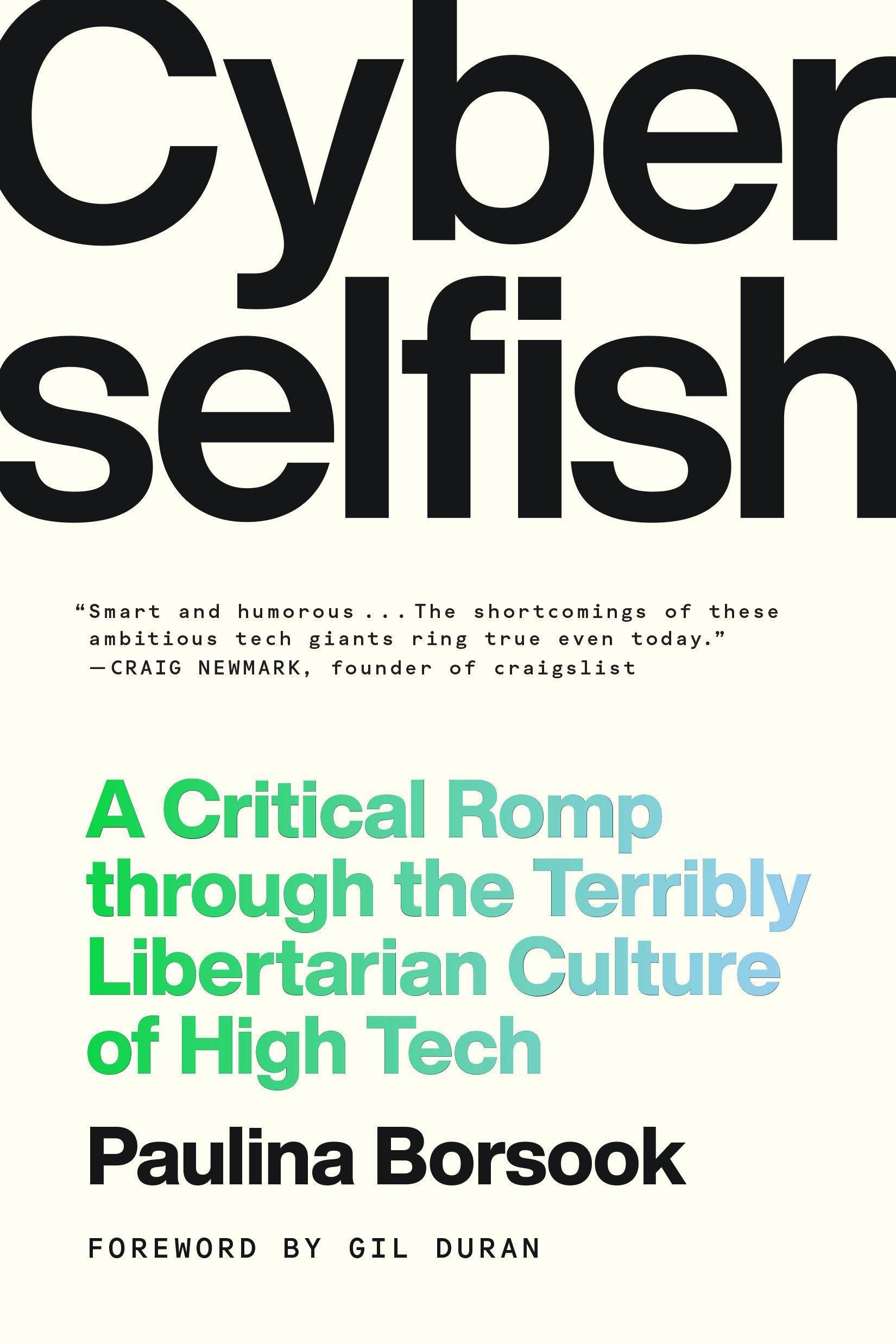
    Cover of Cyberselfish by Paulina Borsook, published 2026-09-15 by Random House LLC US, paperback
    Figure 1. Cover of Cyberselfish by Paulina Borsook, published 2026-09-15 by Random House LLC US, paperback.

    I am just barely old enough to have shadows-on-the-cave exposure to, and shared fascination with the early Wired era. I never had a Wired subscription, my money went to Mad and Guitar Player, but I was very aware of it and the 90s colors, type, and composition it brought to beige world of computing at the time. I read Hotwired and I read suck.com (I probably read Sex and the Single URL on Suck the first time around), and often enough that, looking at copies of bookmarks.html I have from that era, it doesn’t look like I even bothered to bookmark them.

    As a sophomore in community college circa 1999, our graphic design class visited a local design firm’s studio in Frederick, MD (that I sadly don’t remember the name of). In the lobby of their very hip loft space, a contemporary pair of chairs and a reception desk were situated in front of a show piece bookshelf full of what could have been but probably wasn’t quite the entire run of Wired magazine to that date. The effect of a wall of that characteristic 1990s pallet of cyans, magentas, yellows, blacks, and their complements of neons and other saturations checker-boarded on rows of spines exuded a modernity that was very compelling. “You can trust us to handle your design work, we read Wired” is a whole vibe. Wired wasn’t a design magazine, after all.

    I bring up all of this ancient history to situate for myself why someone as smart and engaged as Borsook would have even worked in this space and befriended those who she so expertly skewers in Cyberselfish, as a writer at Wired, with pieces in Suck and elsewhere. Because it was important, and cool as all get out, is entirely plausible! That it was also frustratingly blinkered and doomed informed Borsook’s work; she did not give it a Kara Swisher style pass.

    I picked up Cyberselfish immediately after finishing The Nerd Reich, on Gil Durán’s strong endorsement. Borsook’s a very fun read! In Cyberselfish, Borsook recounts her experiences covering bay area technologists and libertarians and the theories and conferences and movements that motivated them, as a journalist and a friend of technologists in the 1990s and very early 2000s.

    Borsook’s treatments of the people she is critiquing, to me, are fair, but it might help to remember, “Hey, it’s the 90s” like Michael Che jokes on SNL Weekend Update, after telling an off color joke. Antisocial behaviors are not given the accommodations they began to get in the 2010s from Borsook, and, imho, on refreshingly blunt terms.

    A great read for fans of Levy’s Hackers and Kidder’s The Soul of a New Machine and Ursula Franklin’s Massey Lectures, Cyberselfish should sit alongside them in the canon of 20th century tech books.

  4. The Nerd Reich

    Gil Durán

    Cover of The Nerd Reich by Gil Durán, published 2026-08-18 by Avid Reader Press/Simon & Schuster, a 336-page ebook
    Figure 1. Cover of The Nerd Reich by Gil Durán, published 2026-08-18 by Avid Reader Press/Simon & Schuster, a 336-page ebook.

    I’ve been reading Durán on socials for a while and pre-ordered The Nerd Reich as soon as that was possible.

    It is an incredible bummer that a few thousand weirdos have accumulated so much, and even more of a bummer, for lack of sufficient invectives, curses, and scenes of pianos and ACME safes and potted flowers falling on their heads one after the other just before they light an exploding cigar only to get get hit by a speeding locomotive and then run over by a municipal bus full of commuters, that a pile of them are fascists. That they beclown themselves so thoroughly is at least a hopeful preview of their future demise but in the meantime, here we are.

    And so of course they merit another book by and for the left detailing all of the material power they’ve marshaled for the right, and why.

    I have friends who enjoy hate reads. We have learned to make them hide the links they posts to each other so that the rest of us don’t accidentally follow. This book is not a hate read, but if you are like me, you will not exactly enjoy reading it. This kind of read renews my enthusiasm for not extending libertarians any generosity whatsoever, a limitless enthusiasm that needs no renewal. And so it takes me a while to get through because I have to treat this kind of nonsense like an assignment to myself, which I keep putting down saying things like “god damn it” and “what an asshole” and so on.

    Durán includes dozens of pages of citations. This is great because it made for a happy surprise when I finished the final chapter with plenty of paper left in my right hand.

    I haven’t used these citations to look up any of the more frustrating claims Durán makes, and I need to be cause I winced near the end of the penultimate chapter, Antichrist, when Durán cites a poll that found that 44% of American christians support a specific weird set of principles the book has presented. This is of course plausible (that said poll exists and concludes such a thing) but the conclusion it comes to, to me, is not. I’m not a christian and so who am I to know what’s going on with American christians lately but I don’t think it is plausible that many of them share even basic beliefs about what their own religion is all about. I winced similarly when reading a Good Naomi (Klein) book’s story about some beclowning of their own that SFO Airport officials got up to, I think in The Shock Doctrine, which I happened to have just read a bunch about, when her telling of the same tale was fine but a little off.

    I winced because I like to think I’m reading stuff like this from the high ground, and not also mad and titled by and like the subjects being described but of course I am mad and tilted, and I don’t know how anyone can write bout this stuff without feeling similarly and maybe allowing a little of that frustration to bend their analysis. It’s fine, whatever.

    A great gift for the tech executives in your life, or if you like tilting your actual friends, them too I guess. I really hope a bunch of people read it and come to the obvious conclusions Durán has come to, and so it is nice to see it and Durán get the attention it merits. I would much rather that hard line dogmatic poll-driven pluralistic better-things-are-worse-actually aw shucks there is no such thing as neoliberalism third-way Atlantic reading capital D democrats read it. Haha, just kidding… unless?

  5. On the Calculation of Volume (Book IV)

    Solvej Balle

    Cover of On the Calculation of Volume (Book IV) by Solvej Balle, paperback
    Figure 1. Cover of On the Calculation of Volume (Book IV) by Solvej Balle, paperback.

    Ah heck, I typed a nice paragraph up about how this one is about community discourse, and naming things, and class and ecology, about how the climaxes of each book seem to be MacGuffins, and how the cracks in the repetition are continuing to be just magical and do not survive in-story scrutiny or reader scrutiny, they are just happening, but it got lost in posting? I’m bummed to be current now.

  6. On the Calculation of Volume (Book III)

    Solvej Balle, Sophia Hersi Smith, Jennifer Russell

    Cover of On the Calculation of Volume (Book III) by Solvej Balle, Sophia Hersi Smith, Jennifer Russell, published 2025-11-18 by New Directions, 144 pages, part of the On the Calculation of Volume series (book 3)
    Figure 1. Cover of On the Calculation of Volume (Book III) by Solvej Balle, Sophia Hersi Smith, Jennifer Russell, published 2025-11-18 by New Directions, 144 pages, part of the On the Calculation of Volume series (book 3).

    In book two, Balle introduced us to others also trapped in the 18th of November, as scaffolding for the continued exploration of the supremacy of conviction over nature, contrasting the lived experience of seasons and relationships in book II against a literal thief of time (the mysterious bicycle rider). Now in book III, the new characters are trapped in convictions of their age: a rebellious teenager, a mindful 20-something, the narrator whose own convictions they find sentimental, and her older compatriot coming out of a mid-life crisis of career and parenting regrets, as well as literal toothless wisdom, in the form of a lecturing professor not of their cohort. The speculative closing on yet another jerk forward in plot more than doubling their cohort remind us all that this is a serial and you’ll have to read the next one in the series to find out what happens.

  7. On the Calculation of Volume (Book II)

    Barbara J. Haveland, Solvej Balle

    Content warning: On the Calculation of Volume (Book II) cooked for me where Book I merely simmered. Spoilers beyond.

    Cover of On the Calculation of Volume (Book II) by Barbara J. Haveland, Solvej Balle, published 2024 by Norton & Company Limited, W. W.
    Figure 1. Cover of On the Calculation of Volume (Book II) by Barbara J. Haveland, Solvej Balle, published 2024 by Norton & Company Limited, W. W.

    After returning home to see if family was grounding, Tara invests in believing that seasons are matters of projection and will rather than passive to the abstraction and metaphysics of calendars. Who is to say? I enjoyed most of this section in two sittings and was bummed when that era was exhausted and moved past, albeit with a bit of unexpected plot and a suspenseful crises left somewhat open ended, as with the encounter with the coin seller couple in Book I. I wondered if I was in on a Patricia Lockwood style joke after when Tara then returned to the roman coin from Book I and more-than-dwelled on thinkin’ about the Roman Empire, as one does, for a while. Probably not, but haha, what if? The cliffhanger has me looking forward to Book III but the meat of the story is simply engaging with the idea that there isn’t much space between those days when maybe a bit of petrichor or surprise plant growth makes you think out of time, of a day in a season opposite from the one you are in. Delightful.

  8. On the Calculation of Volume (Book I)

    Barbara J. Haveland, Solvej Balle, Solvej Balle

    Cover of On the Calculation of Volume (Book I) by Barbara J. Haveland, Solvej Balle, Solvej Balle, published 2024 by New Directions Publishing Corporation, a 160-page ebook
    Figure 1. Cover of On the Calculation of Volume (Book I) by Barbara J. Haveland, Solvej Balle, Solvej Balle, published 2024 by New Directions Publishing Corporation, a 160-page ebook.

    I enjoyed the prose. It is kind of funny and refreshing for a story like this specifically to engage with history and popular culture so little. If it weren’t for the mention of a phone and maybe kitchen staple trends that aren’t critical to the plot (yet?), this could be set any time in the past hundred years. I appreciate the disregard for time travel tropes where rules are supposedly crisp if you ignore everything the author ignores. Here rules are magical (again, so far). And there were a few things I expected the Tara character to explore that go unmentioned, but that’s fine. I will try the second one.

  9. Sky Daddy

    Kate Folk

    Cover of Sky Daddy by Kate Folk, published 2025 by Hodder & Stoughton, 368 pages
    Figure 1. Cover of Sky Daddy by Kate Folk, published 2025 by Hodder & Stoughton, 368 pages.

    Most of what I want to say about Sky Daddy would spoil the afterword, which was a minor revelation for me. “Oh, jeeze.”

    Set in San Francisco and viciously deadpan about it.

  10. Beautyland

    Marie-Helene Bertino

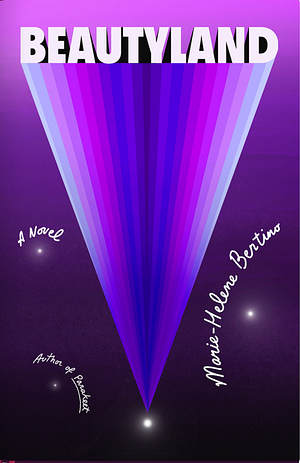
    Cover of Beautyland by Marie-Helene Bertino, published 2024-01-16 by Farrar, Straus and Giroux, a 336-page hardcover
    Figure 1. Cover of Beautyland by Marie-Helene Bertino, published 2024-01-16 by Farrar, Straus and Giroux, a 336-page hardcover.

    A lovely coming-of-age (I learned from a Bookwyrm post that you can call these a Bildungsroman) New York City story with a lot of heart. Another reviewer called it a “funny-sad” which: yeah it’s that too. While I also more than enjoyed Auster’s similar 4, 3, 2, 1, in this case, the same kind of story (or, one quarter of the same kind of story), follows someone just under two years older than me to New York City so rather than the former’s dips into period-overexposure I had lots of “yes, hello” moments. I’m not a nostalgic person but that was a nice personal bonus.

    (Also Cheers gets another well deserved tip of the hat in Beautyland, like it did in Exit Zero.)

Pizza Slow (high quality)

© 2026 gravely