1. The Prince and Selected Discourses

    Niccolò Machiavelli, Daniel Donno

    Cover of The Prince and Selected Discourses by Niccolò Machiavelli, Daniel Donno, published 1984-09-01 by Bantam Classics, a 166-page paperback
    Figure 1. Cover of The Prince and Selected Discourses by Niccolò Machiavelli, Daniel Donno, published 1984-09-01 by Bantam Classics, a 166-page paperback.

    Westside!

    I’ve had this old paperback of The Prince on my bookshelf for probably twenty years and have no memory of when, where, or why I acquired it. Four or five years ago in a purge of books I moved to the “to read” pile instead of getting rid of it, and there it sat, untouched for few more years. Last summer or the summer before that, I finally started it. Today it moves from “to read” to the Ms on the main shelf. I am probably not going to bother with Discourses on the First Ten Books of Titus Livy that fill the final 20 pages or so before the end notes.

    Anyway, Machiavelli reads like a Linkedin Lunatic half the time and Sun Tzu the other half the time. A real vizier’s vizier. All advice is followed by “except sometimes the opposite is true” and then on it goes. I’m not sure I would bother again. Reading about Machiavelli’s life on Wikpedia and in the introduction to this book might have been more interesting than the book?

    It is funny to read near-future post-whatever-crisis science fiction in Clarkesworld about fallen mansions and lands token over by robots and house servants and locals after a revolt on the local billionaire or whatever and then pivot to Machiavelli describing how dumb it is to invest in a fortress to hide from your local haters if you end up in war with another prince who is then supported by your haters. Although it can work if you just need to avoid haters. But you are better off not having haters. Blah, blah, blah.

    The paperback cover, Portrait of a Young Man, Sandro Botticelli, c. 1843, rules. Yes, the Birth of Venus Boticelli.

    Westside!
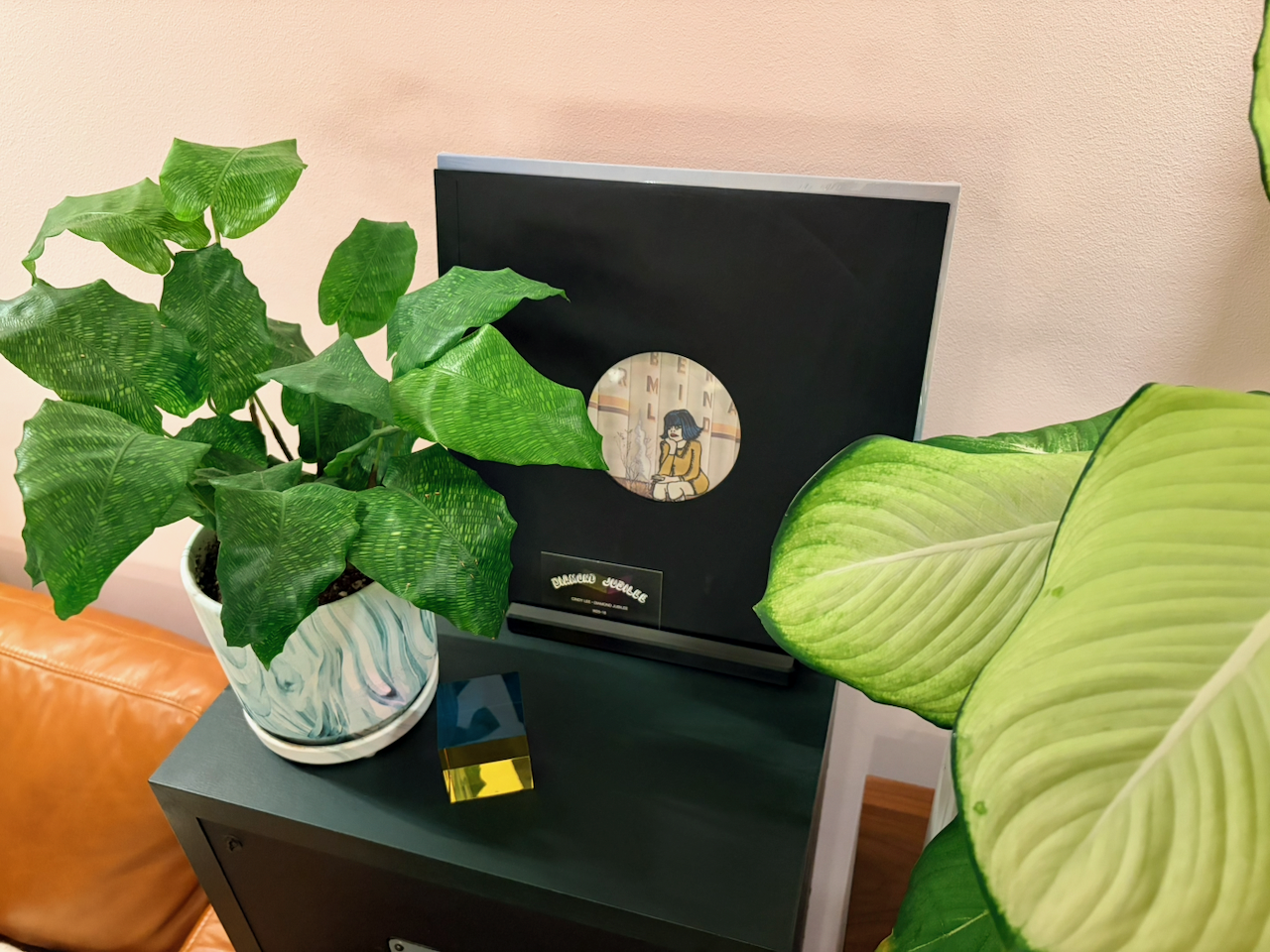
  2. Well that’s a nice effect, placing the character in the illustration seated on the train such that when the sleeve is in front of the cover, they are sitting in the record-label sized hole in the black sleeve.

    Great design!

    A photo of a vinyl copy of City Lee’s “Diamond Jubilee” record in a stand on top of a speaker. The black inner sleeve is in front of the cover on he stand. It has a through-hole in it the size of the record label and it gives the effect that the character illustrated on the front of the cover is sitting in the label hole.
    Figure 1. A photo of a vinyl copy of City Lee’s “Diamond Jubilee” record in a stand on top of a speaker. The black inner sleeve is in front of the cover on he stand. It has a through-hole in it the size of the record label and it gives the effect that the character illustrated on the front of the cover is sitting in the label hole.
  3. The PEN/O. Henry Prize Stories 2009

    Andrew Sean Greer, Tim O'Brien, Viet Dinh, A. S. Byatt, Paul Theroux, Graham Joyce, Ha Jin, Nadine Gordimer, Caitlin Horrocks, Karen Brown, Laura Furman, Anthony Doerr, Junot Díaz, John Burnside, Paul Yoon, Marisa Silver, Kristen Sundberg Lundstrum, E V Slate, Mohan Sikka, Miller, L. E., Alistair Morgan, Roger Nash, Manuel Muñoz, Judy Troy

    Cover of The PEN/O. Henry Prize Stories 2009 by Andrew Sean Greer, Tim O'Brien, Viet Dinh, A. S. Byatt, Paul Theroux, Graham Joyce, Ha Jin, Nadine Gordimer, Caitlin Horrocks, Karen Brown, Laura Furman, Anthony Doerr, Junot Díaz, John Burnside, Paul Yoon, Marisa Silver, Kristen Sundberg Lundstrum, E V Slate, Mohan Sikka, Miller, L. E., Alistair Morgan, Roger Nash, Manuel Muñoz, Judy Troy, published 2009 by Anchor, a 439-page paperback
    Figure 1. Cover of The PEN/O. Henry Prize Stories 2009 by Andrew Sean Greer, Tim O'Brien, Viet Dinh, A. S. Byatt, Paul Theroux, Graham Joyce, Ha Jin, Nadine Gordimer, Caitlin Horrocks, Karen Brown, Laura Furman, Anthony Doerr, Junot Díaz, John Burnside, Paul Yoon, Marisa Silver, Kristen Sundberg Lundstrum, E V Slate, Mohan Sikka, Miller, L. E., Alistair Morgan, Roger Nash, Manuel Muñoz, Judy Troy, published 2009 by Anchor, a 439-page paperback.

    I try a Booker or two every year and enjoy a great novel but get bummed trying to make progress on ones that aren’t for me. I have a few novels (not necessarily Bookers) about half way through on the pile as it is, so I went looking for what short story recognition looks like out there and found the O. Henry Prize. I don’t know why I started with a 2009 volume, it was probably just the first collection in the search results for used books. Anyway, these were great. I’ll probably grab a few other years to have on hand, take on vacation, that sort of thing.

  4. “The sprawling and spectacular Cindy Lee album is an essential trove of music. Each song is like a foggy transmission from a rock’n’roll netherworld with its own ghostly canon of beloved hits.” ( https://pitchfork.com/reviews/albums/cindy-lee-diamond-jubilee/)

    Very well put! I’ve had Diamond Jubilee ( https://cindylee.bandcamp.com/album/diamond-jubilee) on all morning and it is remarkable.

    Figure 2. Embedded Bandcamp player for Diamond Jubilee by Cindy Lee, released 2024-10-23, 32 tracks.

    Via Bandcamp’s “you may also like” under Josh Johnson’s new “Animative” (do check out the harmonized saxophones on the first track) https://intlanthem.bandcamp.com/album/animative.

    Figure 3. Embedded Bandcamp player for Animative by Josh Johnson, released 2026-10-23 by International Anthem, ten tracks.
  5. What started as me celebrating and clowning in chat how many little embellishments in architecture and interior design are simulations of prior building materials or luxuries in order to trick the eye into not seeing imperfections in form or attainment, which modernists (and ultimately postmodernists) foolishly thought they could outrun turned into a wiser actual practicing architect sending me stuff to read and it was very good and I’m jealous of future me having finished reading both.

    So, check out:

    1. Habermas, Jürgen. “Modernity versus Postmodernity.” Translated by Seyla Ben-Habib. New German Critique, no. 22, Special Issue on Modernism (Winter 1981): 3–14. https://newdoc.nccu.edu.tw/teasyllabus/104001041100/Habermas_modernity%20versus%20postmodernity.pdf.

    2. Benjamin, Walter. “The Work of Art in the Age of Mechanical Reproduction.” In Illuminations, edited by Hannah Arendt, translated by Harry Zohn, 217–51. New York: Schocken Books, 1969. Originally written in 1935. https://web.mit.edu/allanmc/www/benjamin.pdf.

  6. Vanessa Wagner’s Philip Glass: The Complete Piano Etudes has been brought to my attention.

    Figure 1. Embedded Bandcamp player for Philip Glass: The Complete Piano Etudes by Vanessa Wagner, released 2025-10-10, 20 tracks.

    Wow. Keep honking.

  7. Https://skeemask.bandcamp.com/album/skee-mask-north-americans-final-circle

    Figure 1. Embedded Bandcamp player for Skee Mask & North Americans - Final Circle by Skee Mask / SCNTST, released 2026-10-30, five tracks.

    Gosh, the album cover of Skee Mask & North Americans’s Final Circle (2026) that dropped last week looks like it was designed in a lab to appeal to me specifically (via https://secretambient.club).

  8. Intrusive high-net-worth-haver-description thought “Omellionaires"

  9. East Side Trail, Sasquatch Box Springs, and Badfinger Loop

    We are spending the weekend in Monte Rio to get a reprieve from city noise. I needed to find a trail that our eight year old could manage, or more accurately, a trail where I could piggy-back him up half the climbs. We’ve already visited Armstrong Woods a few times so I looked on Alltrails and found this one.

    Figure 2. A map of California. The path of a five mile (eight kilometer) hike is indicated. About 814 feet (248 meters) elevation over two and a half hours, (one and three quarters hours moving).
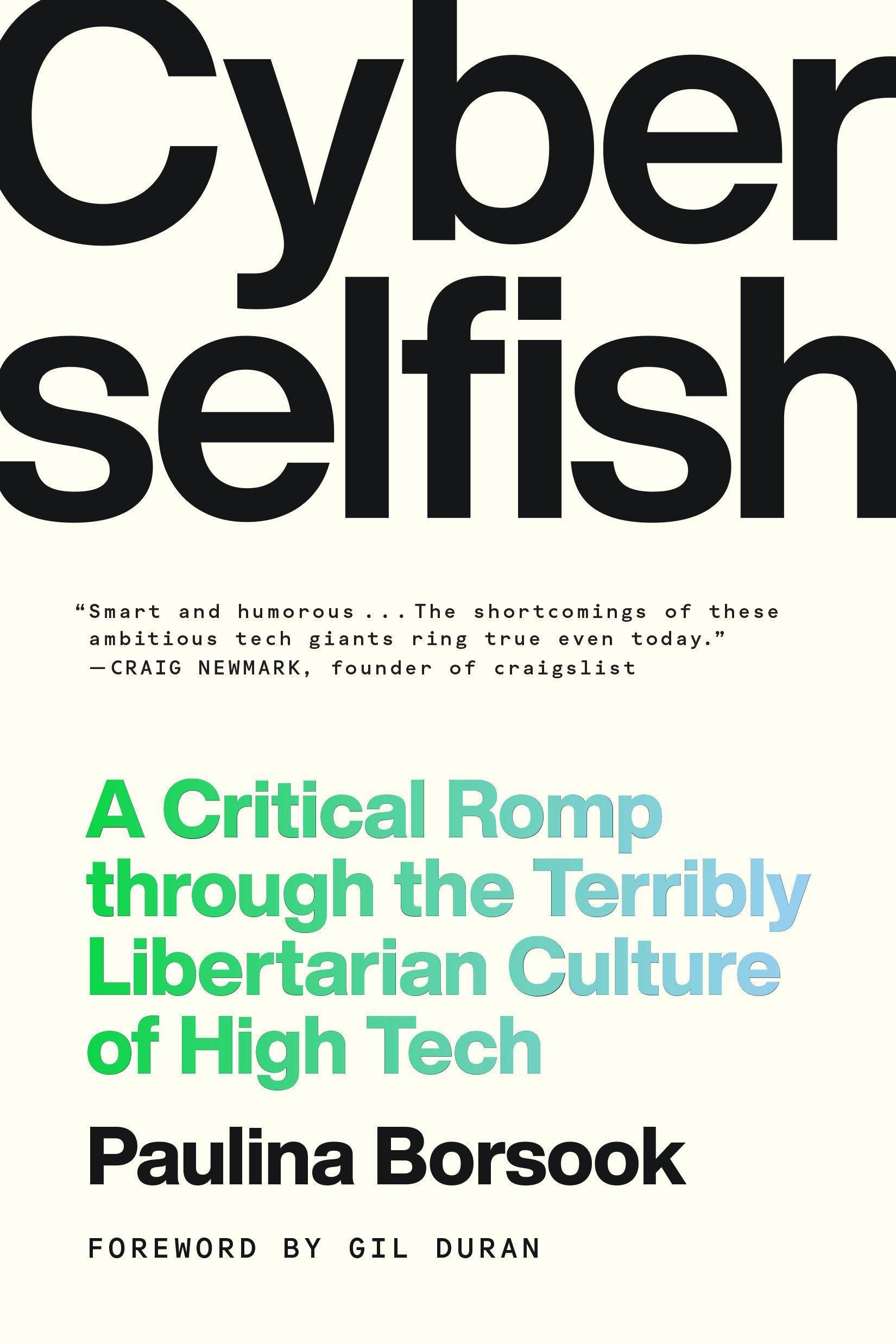
  10. Cyberselfish

    Paulina Borsook

    Cover of Cyberselfish by Paulina Borsook, published 2026-09-15 by Random House LLC US, paperback
    Figure 1. Cover of Cyberselfish by Paulina Borsook, published 2026-09-15 by Random House LLC US, paperback.

    I am just barely old enough to have shadows-on-the-cave exposure to, and shared fascination with the early Wired era. I never had a Wired subscription, my money went to Mad and Guitar Player, but I was very aware of it and the 90s colors, type, and composition it brought to beige world of computing at the time. I read Hotwired and I read suck.com (I probably read Sex and the Single URL on Suck the first time around), and often enough that, looking at copies of bookmarks.html I have from that era, it doesn’t look like I even bothered to bookmark them.

    As a sophomore in community college circa 1999, our graphic design class visited a local design firm’s studio in Frederick, MD (that I sadly don’t remember the name of). In the lobby of their very hip loft space, a contemporary pair of chairs and a reception desk were situated in front of a show piece bookshelf full of what could have been but probably wasn’t quite the entire run of Wired magazine to that date. The effect of a wall of that characteristic 1990s pallet of cyans, magentas, yellows, blacks, and their complements of neons and other saturations checker-boarded on rows of spines exuded a modernity that was very compelling. “You can trust us to handle your design work, we read Wired” is a whole vibe. Wired wasn’t a design magazine, after all.

    I bring up all of this ancient history to situate for myself why someone as smart and engaged as Borsook would have even worked in this space and befriended those who she so expertly skewers in Cyberselfish, as a writer at Wired, with pieces in Suck and elsewhere. Because it was important, and cool as all get out, is entirely plausible! That it was also frustratingly blinkered and doomed informed Borsook’s work; she did not give it a Kara Swisher style pass.

    I picked up Cyberselfish immediately after finishing The Nerd Reich, on Gil Durán’s strong endorsement. Borsook’s a very fun read! In Cyberselfish, Borsook recounts her experiences covering bay area technologists and libertarians and the theories and conferences and movements that motivated them, as a journalist and a friend of technologists in the 1990s and very early 2000s.

    Borsook’s treatments of the people she is critiquing, to me, are fair, but it might help to remember, “Hey, it’s the 90s” like Michael Che jokes on SNL Weekend Update, after telling an off color joke. Antisocial behaviors are not given the accommodations they began to get in the 2010s from Borsook, and, imho, on refreshingly blunt terms.

    A great read for fans of Levy’s Hackers and Kidder’s The Soul of a New Machine and Ursula Franklin’s Massey Lectures, Cyberselfish should sit alongside them in the canon of 20th century tech books.

Pizza Slow (high quality)

© 2026 gravely