I am just barely old enough to have shadows-on-the-cave exposure to, and shared fascination with the early WIRED magazine era. I never had a WIRED magazine subscription, my money went to Mad Magazine and Guitar Player, but I was very aware of it and the 90s colors, type, and composition it brought to beige world of computing at the time. I read HotWIRED and I read suck.com (I probably read Sex and the Single URL on Suck the first time around), and often enough that, looking at copies of bookmarks.html I have from that era, it doesn’t look like I even bothered to bookmark them.
As a sophomore in community college circa 1999, our Graphic Design class visited a local design firm’s studio in Frederick, MD (that I sadly don’t remember the name of). In the lobby of their very hip loft space, a contemporary pair of chairs and a reception desk were situated in front of a show piece bookshelf full of what could have been but probably wasn’t quite the entire run of WIRED magazine to that date. The effect of a wall of that characteristic 1990s pallet of cyans, magentas, yellows, blacks, and their complements of neons and other saturations checker-boarded on rows of spines exuded a modernity that was very compelling. “You can trust us to handle your design work, we read WIRED” is a whole vibe. WIRED wasn’t a design magazine, after all.
I bring up all of this ancient history to situate for myself why someone as smart and engaged as Borsook would have even worked in this space and befriended those who she so expertly skewers in Cyberselfish, as a writer at WIRED, with pieces in Suck and elsewhere. Because it was important, and cool as all get out, is entirely plausible! That it was also frustratingly blinkered and doomed informed Borsook’s work; she did not give it a Kara Swisher style pass.
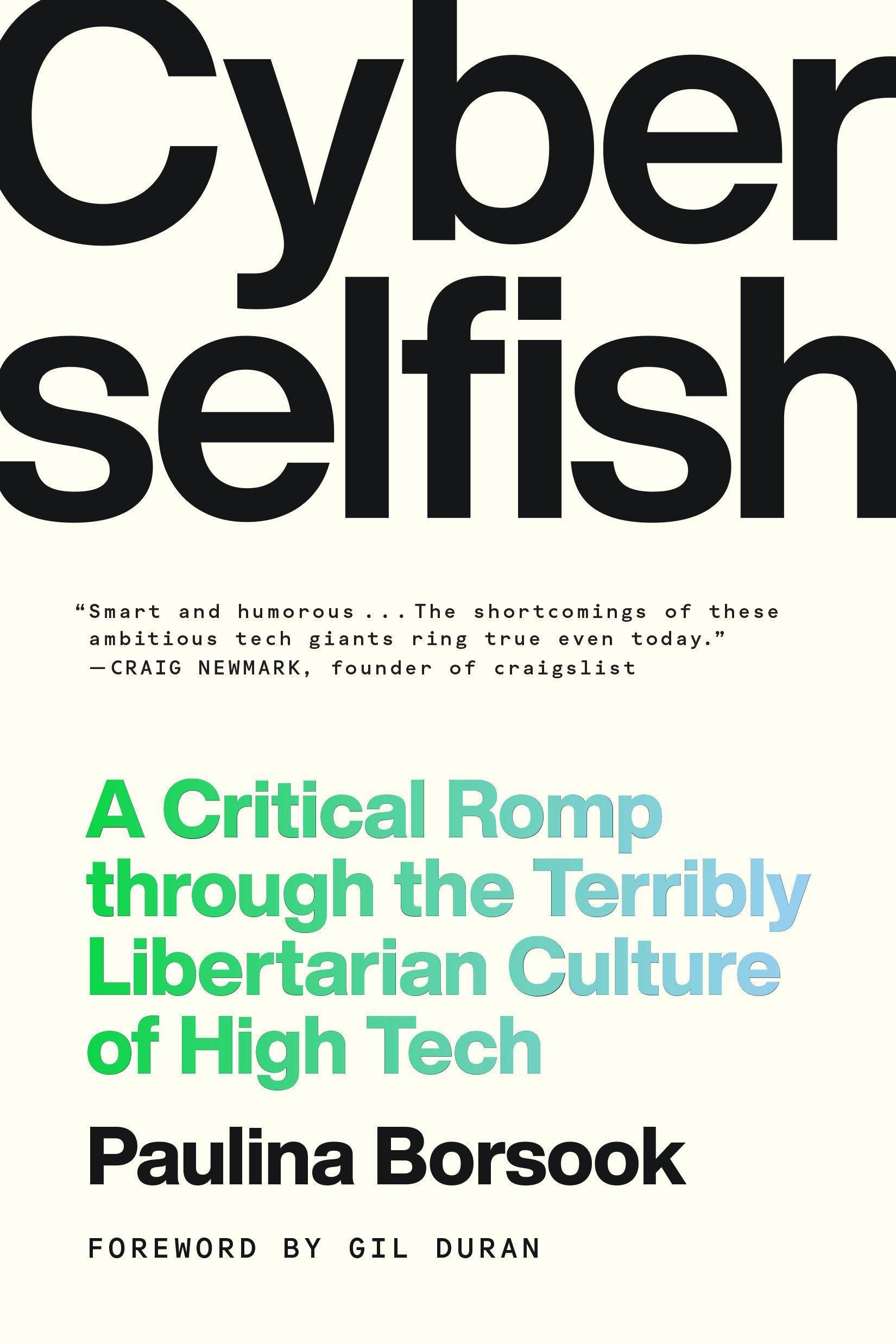
I picked up Cyberselfish immediately after finishing The Nerd Reich, on Gil Durán’s strong endorsement. Borsook’s a very fun read! In Cyberselfish, Borsook recounts her experiences covering bay area technologists and libertarians and the theories and conferences and movements that motivated them, as a journalist and a friend of technologists in the 1990s and very early 2000s.
Borsook’s treatments of the people she is critiquing, to me, are fair, but it might help to remember, “Hey, it’s the 90s” like Michael Che jokes on SNL Weekend Update, after telling an off color joke. Antisocial behaviors are not given the accommodations they began to get in the 2010s from Borsook, and, imho, on refreshingly blunt terms.
A great read for fans of Levy’s “Hackers” and Kidder’s “The Soul of a New Machine” and Ursula Franklin’s “Massey Lectures”, Cyberselfish should sit alongside them in the canon of 20th century “tech” books.