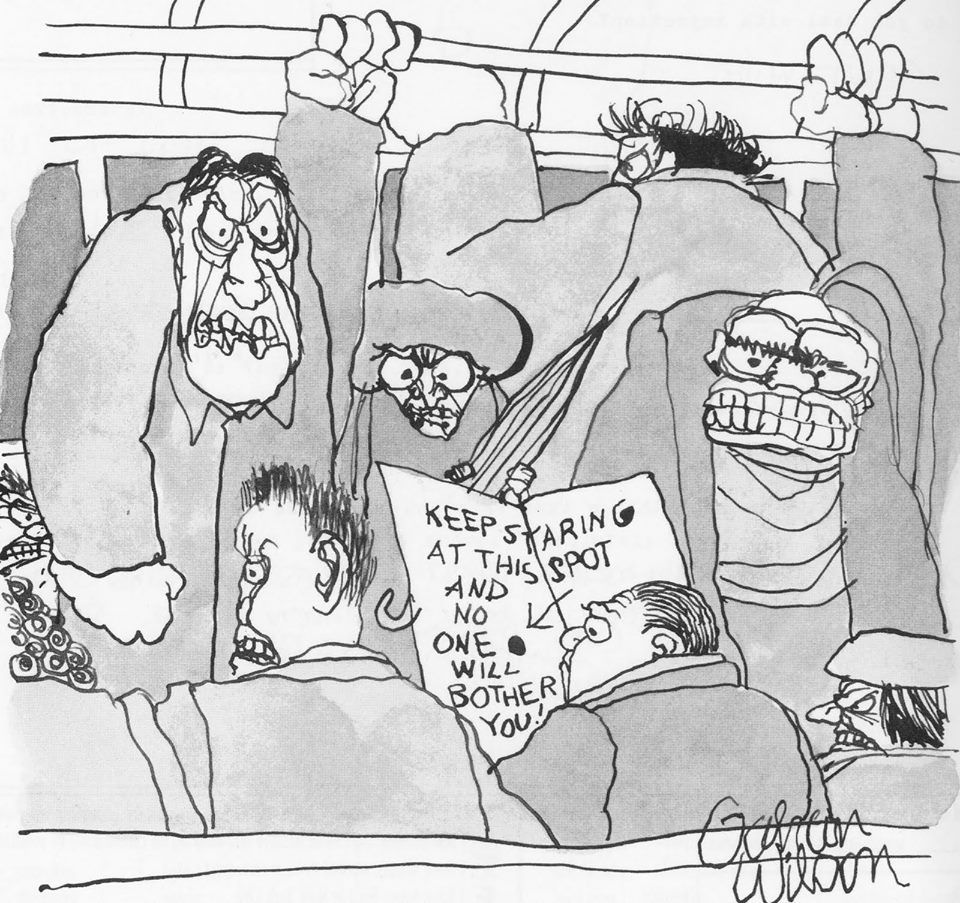
Give me compliments!
A Pro Click™.
February 24th, 2014 7:06pm
After Caedmon, there came other religious poets, the most famous of whom is Cynewulf, whose name means “bold wolf.” The oddest thing about Cynewulf, whose poems are paraphrases of the Bible, is the habit he had of “signing” his poems. There are poets who have done this, of course, in a much more efficient way than Cynewulf. Perhaps the most famous is the American poet, Walt Whitman, who speaks about himself in his poems, saying: “Walt Whitman, un cosmos, hijo de Manhattan, turbulento, sensual, paternal, comiendo, bebiendo, sebrando.” 9 And he has a poem that says: “Qué ves, Walt Whitman?” [“ What do you see, Walt Whitman?”] And he responds, “Veo una redonda maravilla que gira por el espacio.” [“ I see a great round wonder rolling through space.”] And then: “Qué oyes, Walt Whitman?” [“ What do you hear Walt Whitman?”] At the end, he sends best wishes to all the countries of the world, “from me and America sent.” 10 Ronsard did the same in a sonnet. 11 And Lugones has also done it, kind of in jest. 12 Somebody asks in Lunario sentimental, “El poeta ha tomado sus lecciones / Quién es? / Leopoldo Lugones / Doctor en Lunología” [“ The poet has had his lessons / Who is he? / Leopoldo Lugones, Doctor of Lunology.”] But Cynewulf chose another way. This practice is common among Persians, and it seems the Persians did it so that others wouldn’t claim their poems as their own. For example, the great Persian poet Hafiz mentions himself many times, always in praise, in his poems. He says, for example, “Hafiz,” and someone answers, “The angels in the sky have learned your latest poems by heart.” Now, Cynewulf— remember that the detective novel is a genre typical of the English language, although it was invented in the United States by Edgar Allan Poe— Cynewulf anticipates cryptography, using the letters of his own name to make a poem about the Final Judgment. 13He says, “C and Y kneel in prayer; N sends up its supplications; E trusts in God; W and U know they will go to Heaven; L and F tremble.” And this is written in Runic letters.
Borges, Jorge Luis (2013-07-22). Professor Borges: A Course on English Literature (p. 43). New Directions. Kindle Edition.
And on the cool check in Center stage on the mic And we’re puttin’ it on wax It’s the new style
Four and three and two and one What up! And when I’m on the mic - the suckers run (Word!) Down with Adrock and Mike D. and you ain’t And I got more juice than Picasso got paint Got rhymes that are rough and rhymes that are slick I’m not surprised you’re on my dick B-E-A-S-T-I-E, what up Mike D. Ah yeah, that’s me I got franks and pork and beans Always bust the new routines I get it - I got it, I know it’s good The rhymes I write - you wish you would I’m never in training - my voice is not straining People always biting and I’m sick of complaining So I went into the locker room during classes Bust into your locker and I smashed your glasses You’re from Secausus - I’m from Manhattan You’re jealous of me because your girlfriend is cattin’
There it is - kick it!!!
Beastie Boys (1986) The New Style. Licensed To Ill.
February 20th, 2014 8:47am
In 1500 years, how will scholars unpack the irony and doublespeak of our cants?
Later, the Germanic poets discovered the refrain and used it infrequently. But poetry had developed another hierarchical poetic instrument: that is, kennings— descriptive, crystallized metaphors. Because poets were always talking about the same things, always dealing with the same themes— that is: spears, kings, swords, the earth, the sun— and as these were words that did not begin with the same letter, they had to find a solution. The only poetry that existed, as I have said, was epic poetry. (There was no erotic poetry. Love poetry would appear much later, in the ninth century, with the Anglo-Saxon elegiac poems.) For this poetry, which was only epic, they formed compound words to denote things whose names did not begin with the requisite letter. These kinds of formations are quite possible, and normal, in the Germanic languages. They realized that these compound words could very well be used as metaphors. In this way, they began to call the sea “whale-road,” “sail-road,” or “fish-bath”; they called the ship “sea-stallion” or “sea-stag” or “sea-boar,” always using the names of animals; as a general rule, they thought of the ship as a living being. The king was called “the people’s shepherd” and also— this surely for the minstrels’ sake, for their own benefit—“ ring-giver.” These metaphors, some of which are beautiful, were employed like clichés. Everybody used them, and everybody understood them.
In England, however, poets finally realized that these metaphors— some of which, I repeat, were very beautiful, like the one that called the bird the “summer guardian”— ended up hobbling poetry, so they were slowly abandoned. In Scandinavia, on the other hand, they carried them to their final stage: they created metaphors out of metaphors by using successive combinations. Thus, if a ship was “sea-horse” and the sea was “gull’s field,” then a ship would be “horse of the gull’s field.” And this could be called a metaphor of the first degree. As a shield was the “pirate’s moon”— shields were round and made of wood— and a spear was the “shield’s serpent,” for the spear could destroy the shield, that spear would be the “serpent of the pirate’s moon.”
This is how an extremely complicated and obscure poetry evolved. It is, of course, what happened in learned poetry, within the highest spheres of society. And, as these poems were recited or sung, it must be assumed that the primary metaphors, those that served as the foundation, were already familiar to the audience. Familiar, even very familiar, almost synonymous with the word itself. Be that as it may, the poetry became very obscure, so much so that finding the real meaning is like solving a puzzle. So much so that scribes from subsequent centuries show, in the transcriptions of these same poems we have now, that they did not understand them. Here’s a fairly simple kenning: “the swan of the beer of the dead,” which, when we first see it, we don’t now how to interpret. So, if we break it down, we see that “beer of the dead” means blood, and “swan of the blood” means the bird of death, the raven, so we see that “swan of the beer of the dead” simply means “raven.” And in Scandinavia, whole poems were written like this and with increasing complexity. But this did not happen in England. The metaphors remained in the first degree, without going any further.
Borges, Jorge Luis (2013-07-22). Professor Borges: A Course on English Literature (p. 6). New Directions. Kindle Edition.
February 19th, 2014 8:50am